
Understanding and Managing Upper Crossed Syndrome
What is Upper Crossed Syndrome?
What happens when you are driving or working too much, at a computer, stressed with your shoulders up around your ears or looking down at your phone too often? Upper Crossed Syndrome is a common problem from these stressors of modern life.
Good news, we can stretch the muscles that have contracted too much to decrease tension in the system and restore function to the opposing muscles.The stretches and exercises below can be used to restore function, improve posture and balance out your muscle strain patterns.
Stretches for Upper Crossed Syndrome
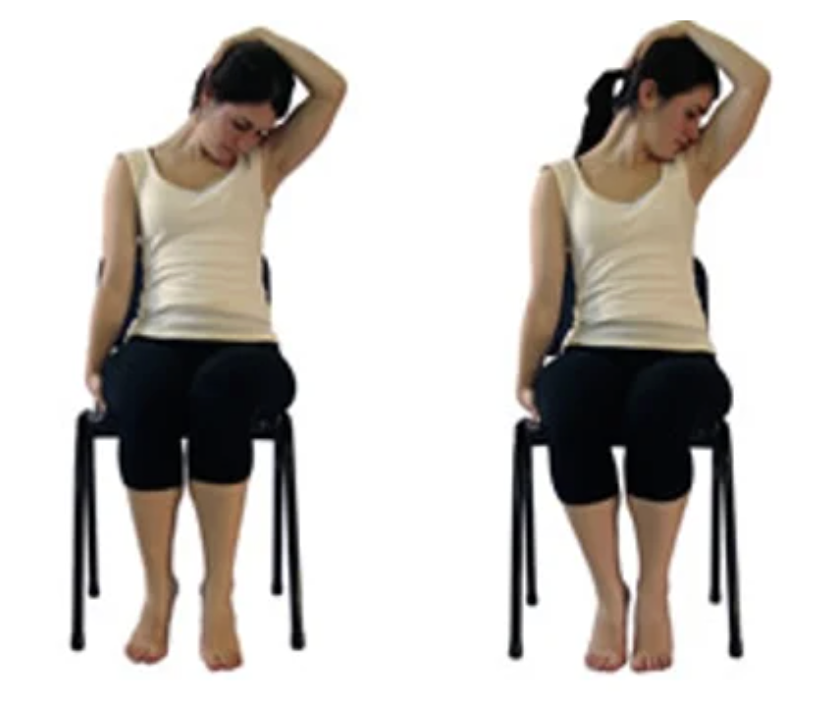
Neck Stretch
Muscles Targeted: Sternocleidomastoid, Scalenes, Levator Scapulae
When seated in a chair,
If stretching your right neck, grasp the bottom of the seat with your right hand.
Lean your head to the left toward your left shoulder until the stretch is felt. Hold for 10 seconds or 3 deep breaths.
Repeat while leaning to left and looking down at the armpit to stretch the back of the neck.
Repeat on other side.
Repeat 3-5 times.
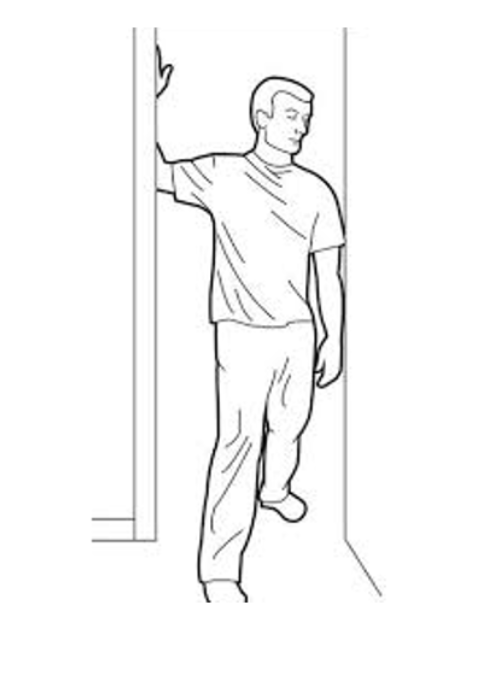
Doorway Stretch
Muscles Targeted: Pectoralis ajor, Pectoralis minor
From a standing position:
Bend your elbow and shoulder to 90 degrees.
Place your palm, wrist, forearm, and elbow against the wall.
Lean against the wall until the stretch is felt in your chest. This usually requires your body to be in front of your arm or turn slightly away from the arm in the doorframe.
Hold for 10 seconds.
Relax. Take 3 deep breaths.
Repeat on other side.
Repeat 3-5 times each side.
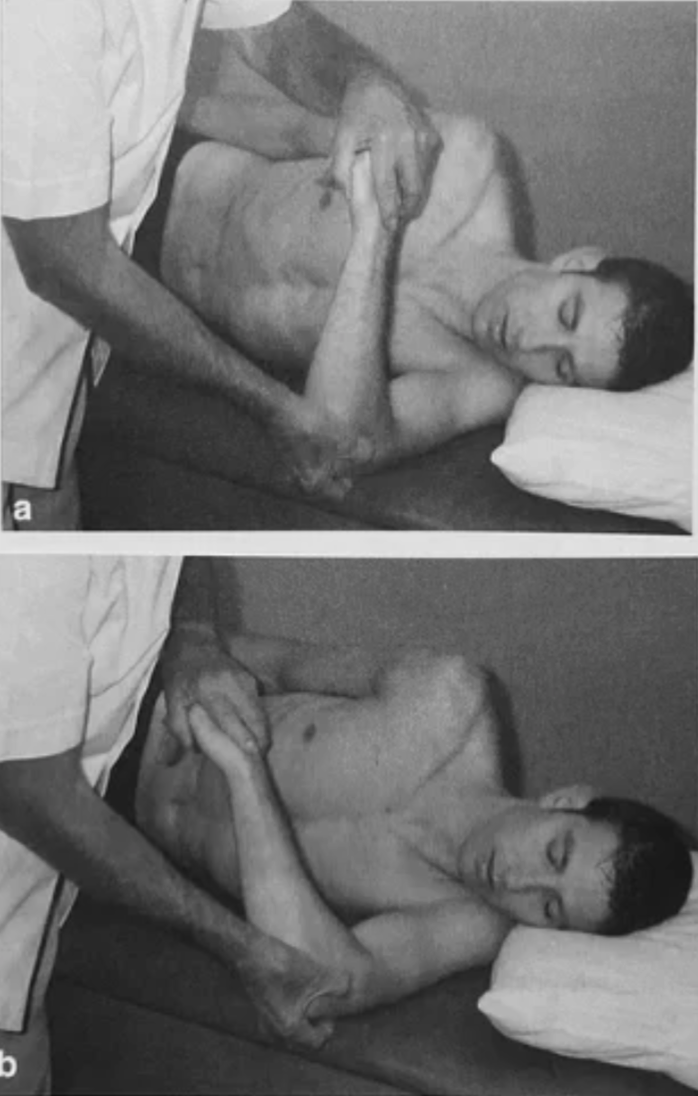
Shoulder Stretch
Muscles Targeted: Posterior shoulder capsule
Lay on your side with your arm that is resting on the table out in front of you.
Bend your elbow to 90 degrees.
Allow your shoulder to rotate towards the floor, with gentle pressure on the forearm from the other hand.
When the stretch is felt, hold in place for 10 seconds.
Relax.
Repeat on the other side.
Repeat 3-5 times.
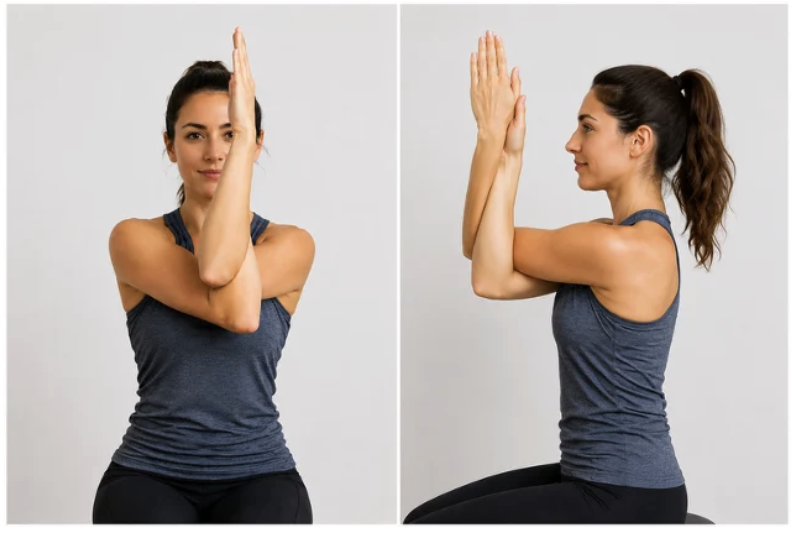
Eagle Arm Stretch
Muscles Targeted: Levator Scapula, Trapezius
Sit or stand tall with your back straight and shoulders relaxed.
Extend both arms straight out in front of you at shoulder height with your palms facing up.
Cross one arm over the other at the elbows.
Bend your elbows and bring your forearms upright.
Wrap your forearms around each other so your palms touch together. If your palms cannot touch, press the backs of your hands together instead.
Gently lift your elbows slightly upward and away from your chest while keeping your shoulders relaxed. Bring your shoulder blades down your back.
Hold the stretch for 20–30 seconds while breathing slowly and deeply. Slowly release the stretch and switch arm positions.
Repeat 2–3 times on each side.
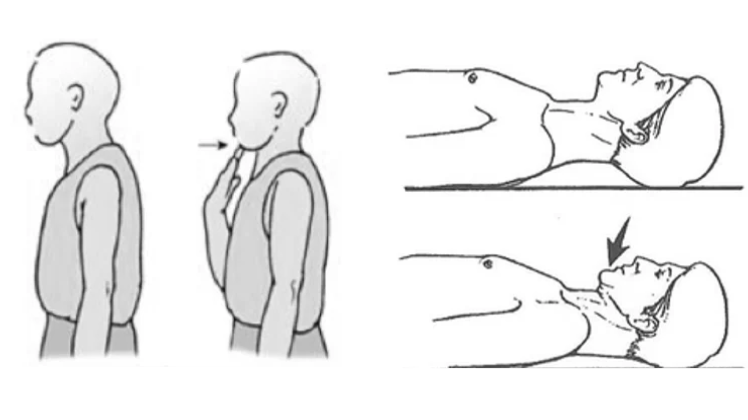
Retraining Deep Neck Flexors
In a seated position or while lying flat on your back, tuck your chin to your chest.
Hold your chin there for 5-7 seconds.
Relax.
Repeat 5-7 times.
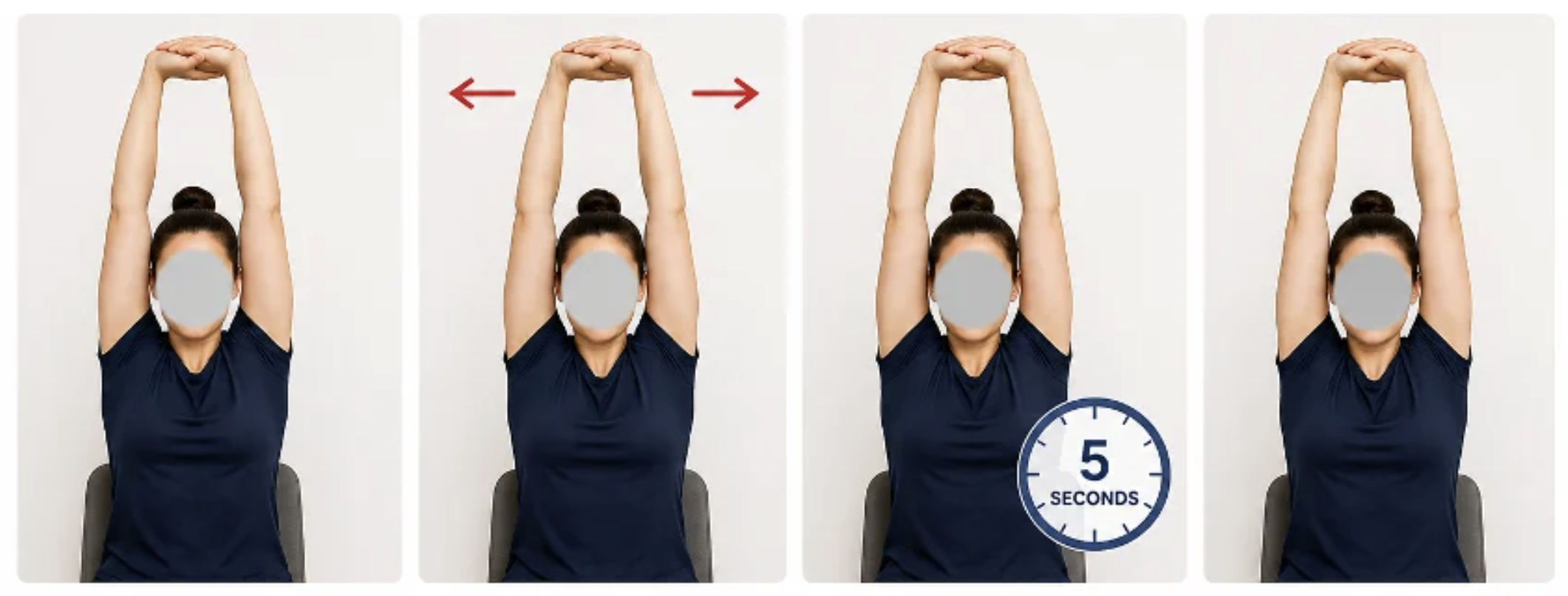
Shoulder Stabilization
In a seated or standing position, reach overhead with both arms and clasp hands. When clasping hands, one palm should face the ceiling and the other should face the ground.
Work to pull your hands apart, contracting your musculature, without releasing your grasp.
Do this for 5 seconds.
Relax. Repeat 5-7 times
Have questions? Need help?
We are here to guide you through this. Reach out today!