
Understanding and Managing Musculoskeletal Injury
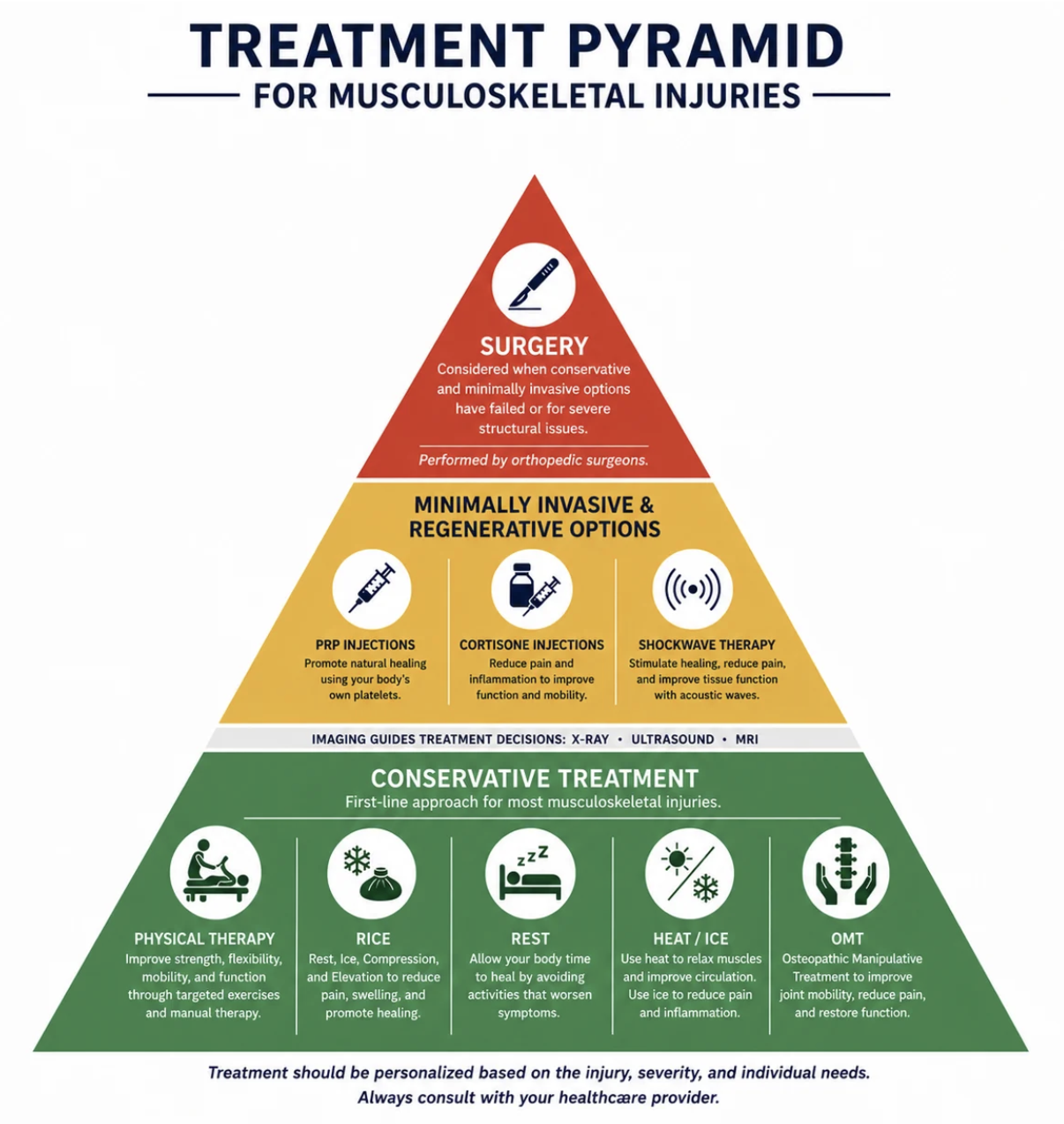
Check out the Treatment Pyramid
Frequently asked questions
When should I try conservative treatment before considering other options?
Most musculoskeletal injuries improve with conservative treatment over 4–12 weeks, depending on the severity and type of injury. Conservative management often includes:
Physical therapy
Rest and activity modification
Ice/heat
RICE (Rest, Ice, Compression, Elevation)
Osteopathic Manipulative Treatment (OMT)
Anti-inflammatory medications (NSAIDs)
Acupuncture/dry needling
Many mild sprains, strains, tendonitis injuries, and overuse conditions improve during this timeframe. However, recovery varies based on age, injury severity, activity level, and overall health.
When should imaging be considered?
Imaging may be recommended when:
Symptoms persist despite conservative treatment
A fracture or major structural injury is suspected
There is significant weakness or instability
Surgical planning may be needed
Common imaging studies include:
X-rays → best for bones, arthritis, fractures
Ultrasound → best for tendons, muscles, dynamic injuries
MRI → best for spine, joints, ligaments, cartilage, tendons and disc/nerve evaluation
Does every musculoskeletal injury require surgery?
No. Most musculoskeletal injuries improve without surgery. Orthopedic surgery is generally reserved for:
Significant structural injuries
Failed conservative treatment
Persistent pain or instability
Fractures or tendon/ligament tears requiring repair
The goal is usually to start with the least invasive treatment appropriate for the injury. Even a “bad disc”, arthritis or severe pain can heal in time!
Who performs minimally invasive or regenerative treatments?
Minimally invasive and regenerative musculoskeletal treatments are commonly performed by:
Sports medicine physicians
Physical Medicine & Rehabilitation (PM&R) physicians
Orthopedic Surgeons
Pain management specialists
These providers may use image guidance, such as ultrasound, to improve precision and safety during injections or procedures.
What are warning signs that I should seek medical attention sooner?
You should contact a healthcare provider promptly if you experience:
Severe swelling or deformity
Inability to bear weight or use the limb
Numbness or tingling
Weakness or loss of function
Persistent pain that does not improve
Locking or instability of a joint
Fever, redness, or warmth around a joint
Sudden “pop” followed by weakness or bruising
Night pain or unexplained worsening symptoms
These symptoms may indicate fractures, tendon ruptures, nerve involvement, infections, or significant ligament injuries.
How do I know when I need surgery or need to see and Orthopedic specialist?
Many patients progress through these stages of care before surgery is considered (or covered by insurance):
Conservative Management
Rest, bracing, physical therapy, OMT, medications, activity modification
Advanced Non-Surgical Treatments
Cortisone injections
PRP injections
Shockwave therapy
Guided rehabilitation programs
Imaging & Specialist Evaluation
X-ray, ultrasound, or MRI
Evaluation of persistent symptoms or structural injury
Orthopedic Surgery Consultation
Considered when symptoms persist, function declines, or significant structural damage is identified on imaging
Can I continue exercising during recovery?
In many cases, yes, but activity often needs to be modified. Low-impact movement and guided rehabilitation can help maintain strength and mobility while reducing stress on the injured area. Your healthcare provider or physical therapist can help determine safe activity levels. Never Skip Rest!
Who should I see first?
The most efficient care starts with a good medical evaluation and referral to conservative treatment:
Primary care or sports medicine physicians
Osteopathic physicians (D.O.s) performing hands on treatments called OMT or OMM
Physical therapists
Chiropractors
Acupuncturists
Pain management specialists
Treatment is individualized based on symptoms, goals, activity level, and injury severity.
Have questions? Need help?
We are here to guide you through this. Reach out today!